

Duration: 23:21 Date:
Stage 4 Melanoma, 20 Liver Lesions and a Husband Who Wouldn’t Wait
Also available on
Listen here

Hosted by Paityn ThorneHead of Patient Care
Episode Guests
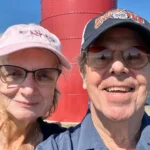
Karen & Jeff Gilman
Stage 4 melanoma patient and her husband, a registered nurse
Karen and Jeff Gilman are a married couple from Michigan. In 2023 Karen was diagnosed with lymphoma and stage 4 melanoma with more than 20 lesions on her liver. Jeff, a registered nurse, researched every option alongside her oncology team, and the couple combined standard immunotherapy with repurposed medications, including fenbendazole and ivermectin following the Joe Tippens protocol, plus supplements and support from Heal Navigator. Karen reports that scans showed no evidence of either cancer within about three months, and the couple now share their story to encourage other patients and caregivers.
About this Episode
“We were told to wait… while cancer was still there.” In 2023, Karen Gilman was facing not one but two diagnoses: lymphoma and stage 4 melanoma, with more than 20 lesions on her liver. Her doctors wanted to treat the melanoma and “watch and wait” on the lymphoma. Her husband Jeff, a registered nurse, couldn’t accept that.
In this episode, Paityn Thorne, Heal Navigator’s Head of Patient Care, talks with Karen and Jeff Gilman about the choices they made after a stage 4 diagnosis. Alongside standard immunotherapy, the couple added repurposed medications, including fenbendazole and ivermectin following the Joe Tippens protocol, plus supplements and support from Heal Navigator.
They describe pushback from one oncologist, keeping detailed notebooks of every test result, and what Karen’s scans showed within about three months. Today Karen is back to regular life, and the couple share their story to encourage other patients and caregivers. You can also read Karen’s written story.
In This Episode, You’ll Discover:
- Facing “watch and wait”: the emotional toll of being told to monitor her lymphoma instead of treating it right away.
- Building a plan B: how Jeff used his nursing background to research fenbendazole, ivermectin and supplements.
- Navigating the system: dealing with being “scolded” by one oncologist and finding a middle ground with Karen’s care team.
- Watching for interactions: why they checked how repurposed drugs might interact with immunotherapy.
- The 90-day scans: what Karen’s PET scans showed for both cancers within about three months.
- Life today: Karen’s routine now, chemo brain, and the faith and community that carried them.
Chapters
- 0:00 Told to “watch and wait”
- 1:10 Two diagnoses: lymphoma and stage 4 melanoma
- 2:03 Immunotherapy and the Joe Tippens protocol
- 5:15 A nurse-husband’s research, and pushback from oncology
- 11:45 Checking interactions with immunotherapy
- 13:23 Side effects
- 14:12 Talking with the oncologist
- 14:52 Seeing results in blood work and scans
- 15:55 A day in the life of Karen’s protocol
- 18:41 Where Karen is today
- 20:02 Advice for anyone facing “watch and wait”
If you’re facing a “watch and wait” recommendation, or supporting a spouse through a stage 4 diagnosis, Karen and Jeff’s story shows what advocating together can look like.
Disclaimer: This episode is educational and reflects the guests’ personal experience. Karen and Jeff worked with Heal Navigator, and individual results vary. Karen was also receiving standard immunotherapy. Fenbendazole and ivermectin aren’t approved to treat cancer, and evidence in humans is still limited. It isn’t medical advice or a recommendation for any specific treatment. Talk with your own physician before changing any cancer treatment or diet.
Transcript
Karen & Jeff Gilman (00:00)
We were using ivermectin and fenbendazole according to the Joe Tippens protocol. I wanted to try everything. But regular conventional medicine did not appreciate us doing that. And the one doctor who we saw, she was very angry with me trying all this and said, it’s useless, it doesn’t work. She kind of scolded us. And we scolded us for doing this and that Karen had six months to live at best.
Paityn Thorne (00:29)
What do you do when you’re told to wait while cancer grows? Today’s episode is a powerful story of intuition, urgency, and taking control when the standard path doesn’t feel like enough. In 2023, Karen was navigating not just one, but two life altering diagnoses, lymphoma and stage four melanoma. While one cancer demanded immediate action, the other came with a very different recommendation, watch and wait. If you’ve ever felt stuck between trusting the system and trusting your intuition, this episode is for you. Let’s dive in.
Karen & Jeff Gilman (01:10)
Well, I’ve had headaches for years and so my family physician finally ordered MRI. And so we had that done and they found something in my neck. And so they did a biopsy of that and found out that was the lymphoma. So then they wanted to take a scan of the rest of the body to see where else the lymphoma might be. And they found something suspicious on my liver. So we had a liver biopsy done and that’s when I found out that I had melanoma cancer that had metastasized from a cancer spot on my back. So it was stage four when we found out. That was, yeah, scary. Stage four melanoma on the liver, there were 20 spots at least.
Paityn Thorne (01:55)
So what treatments were being proposed to you during this time, especially with 20 metastasis to the liver or lesions on the liver?
Karen & Jeff Gilman (02:03)
So they wanted me to do immunotherapy. I had a port installed and we started treatments we did three treatments of two different drugs at the same time and had another PET scan done and all the spots were gone in three months. I did 11 treatments in full and the spots never came back. But part of that also too is that we started immediately in with doing fenbendazole, ivermectin, all of that started. When I found out about that, that’s when we really went whole hog on it. And I had done a lot of research. I had a friend of mine, they also were part of Heal Navigator as I recall, and she was telling me about this, which is what led me to the site and started asking questions especially when I heard about Joe Tippens protocol. We started immediately doing fenbendazole, ivermectin, And I had done a lot of research. Was online and going through that and looking at that. The stage four liver cancer really bothered me. I knew we were in trouble and I wanted to really… think outside the box. When I was talking with the oncologist who I respect I just didn’t like the fact that we were putting the lymphoma on hold. Obviously the other ones more serious and important, but to be told hospital protocol is if it’s not bothering you, that’s not affecting your life, then we’re not treating it. And I didn’t like that idea. I wanted it gone. And that’s when it really propelled me to do as much research as I could possibly find. So I was not only in touch with a regular physician, but also with Heal Navigator. I talked to Madhavi Parikh and among other people there, including Janna Champagne along the way and stayed in touch with her too, because we were looking at a cannabis side of things too, which we did some of. I don’t mean to jump around a lot, but there was just so much going on at that time. It can be a really almost frightening experience because you’re about to lose your spouse and you can, or you can have lingering things. I just wanted it gone. Firm believer in Jesus Christ and have been for years and we did a lot of praying and we felt that our community of church family that we have, pray for us too. So I believe it made a huge difference. But we had a lot of help along the way. So sorry, I don’t mean to.
Paityn Thorne (04:59)
No, it’s beautiful. I just I can tell the love between you guys obviously and how you went into that protector mode for her and just I’m sure you were up all night researching day in day out.
Karen & Jeff Gilman (05:15)
They were tiring. It was exhausting at times. I put everything I had into it. I’m a registered nurse, but there’s so many things that I don’t know about the cancer side of things or the different drugs and what the side effects are. So we just looked at everything. And then I found out about supplements and so forth. We were using ivermectin and fenbendazole according to the Joe Tippens protocol. I wanted to try everything. As long as she was willing to do it, Karen was willing to take it on, then we were gonna do it, including a whole bunch of supplements. But regular conventional medicine did not appreciate us doing that. And the one doctor who we saw, she was very angry with me trying all this and said, it’s useless, it doesn’t work. She kind of scolded us. And we scolded us for doing this and that Karen had six months to live at best. And that’s what she told me. And sent us on our way. But you know, that’s what conventional medicine does. They really don’t want to look at anything else, just what they’re taught in school. And if it’s outside the box, which this is, let’s face it, it’s not conventional. So we just kept doing the protocols that we had in place and kept moving forward. And it’s hard to know which worked. I believe that all of it working together, I think we cleared the road of junk in her body by what we did with the protocols that we put in place and allowed the other medication, the more conventional stuff, the Opdivo and the others that she was on to work the way it was supposed to. I used AI for a lot. I punched in a lot of information and it spits it out in seconds. So it helps me to stay on track and to ask more questions along the way. Now, AI is not going to tell you about fenbendazole that really wants to destroy you from staying away from that and also ivermectin. Finding ways to get around that. But there were other things that I would give it signs and symptoms of what we’re seeing and so forth and what we’re doing. And it would list questions to ask the doctor, ask this, ask that. I just really felt that that was really vital in my research. My friends who lost her daughter to cancer had used Heal Navigator and they really believed in you guys and they did all they could. But let’s face it, not everybody is going to be healed from cancer. Not everyone is. And sometimes people are going to fall back and have reboots of cancer. And it’s unfortunate. And that’s sad. We were really blessed. I keep saying it, I just felt like we were led in the right direction. When I found out about Heal Navigator immediately contacted them and set up an appointment then our interest leaned a little bit more and Heal Navigator was able to help us and turned us on to Janna Champagne. And she turned us on to a company that that sells the CBD oil and Unity formula. All of that, just one thing cascaded, every door that we needed opened was open for us. And I believe that’s the power of prayer, I really do. We were very fortunate because frankly, I had no idea. This was all new to me. I mean, I’ve had family members, my brother just died a couple of years ago from a really nasty cancer. My father died from So I just really wanted to try something outside the box. I think you should, first of all, I think you should listen to your doctor. If your oncologist tells you that you should try this therapy, then I think you should do it. But if you have in your heart and you’ve done other research and you’ve had other people like Heal Navigator is giving examples doing these podcasts and they’ve seen other people, then I think you should follow what your heart tells you to do. I wanted every option available. People need to have their options open and they need to have plans A, B, and C. If this doesn’t work, conventional medicine doesn’t work, then what am I gonna do next? And the other thing is too, is that when we’re talking with doctors and so forth and I’m listening, I don’t like waiting. Just being told, I’m sorry, you’re gonna have to wait a year before we’re gonna treat you for the lymphoma. I didn’t like that at all. I just felt like this is a cancer and this is growing no matter how slow it is. And then I kept hearing, well, people can live with lymphoma for 30 years or 20 years or whatever it is. My thinking is why live with it at all? If you have an opportunity to fight back and get rid of it all, which is my whole goal, 100%, get rid of everything. I just feel like you need to be strong in what you believe and present the facts that you have. I always felt like this was the right thing to do. Everything we did, felt like it was, sometimes I just also felt like I was flying by the seat of my pants, because I’m talking about my wife’s life and I’m saying, here, try this, because we were doing crazy stuff at times. We did stuff like Essiac tea. She absolutely hated it. But I heard that it was good for cancer. And I discussed with Madhavi about all of that and so forth. And she sent me emails. The woman was fantastic about sending me emails. And Janna buried me in emails with paperwork. There was mountains of stuff regarding her knowledge regarding marijuana, cannabis, and its use, especially like for cancer treatments and other things and for sleep, which Karen was having problems with,
Paityn Thorne (11:35)
Did you ever have any like concerns or discomfort when it came to using fenbendazole and ivermectin alongside standard treatment.
Karen & Jeff Gilman (11:45)
Yes, yeah, actually there was. There was some things with fenbendazole and ivermectin that they might interfere with the overall use like with a drug called Opdivo and there was another one, I can’t remember the name of it, yes. So there was some concern about it. But again, I just felt like we needed to go for it. We had really nothing to lose. My dad, for example, died in 1986 at the age of 63, I think, 63 and a half. He was misdiagnosed for an entire year. And that was way back when. So I kept that in the back of my mind. So I just really stayed on the forefront of my nursing knowledge, medical knowledge, helped me. Helped a lot. Helped me a lot to understand what was going on. And I knew who to, it just, like I said, I can’t say it enough. It’s just everything fell into place. Every door opened. I just had so much help from so many, many people that just, And I trusted Jeff completely. Know he did a lot of research, spent many hours doing stuff and his medical knowledge, which I have no medical knowledge. So I just totally trusted Jeff and I felt comfortable with what we were doing and never questioned it.
Paityn Thorne (13:07)
Did you experience any side effects from fenbendazole or ivermectin? I know that’s a lot of times people’s concerns is like, I want to use this, but I’m so scared that I’m going to feel some type of way by using it.
Karen & Jeff Gilman (13:23)
I mean, not that I know of because I was taking along with, the other cancer drug too. So, I mean, I had a few little problems along the way, but I had an itching problem at first. I think that was the other, I think that was the cancer drug. And then I had a lot of problems with diarrhea. Now that could have been some of the fenbendazole We really don’t know. The side effects were were from the immunotherapy drugs. Yeah. We think anyways that caused vitiligo. Her skin pigmentation changed significantly.
Paityn Thorne (13:55)
So at what point was your oncologist ever catching on to like you guys using the repurposed medications or implementing? Did you ever like open up and speak about these things with them? I know it can be of two different worlds.
Karen & Jeff Gilman (14:12)
He knew, but yeah, we didn’t discuss it much with him because we knew he didn’t really approve. He he wasn’t thrilled with the idea. So we just kept, frankly, just kept quiet. We just told each other we were just going to follow this protocol, do all the supplementation that we did on top of everything else. We use berberine among many other different supplements. And we just went after it.
Paityn Thorne (14:37)
At what point did you guys really notice that big like, okay, this is really working, like we’re, we’re, need to keep going. And you started feeling really confident in all the research that you were doing.
Karen & Jeff Gilman (14:52)
Well, we kept doing blood work. We kept going back to the oncologist when we’d go for the treatments and so forth. And we started seeing things improve. At one point, the lab work was really high and the doctor was really pleased about that. It meant that the drugs were working and killing off the cancer. So we were happy with that. So after, my gosh, was three months or something like that, a short period of time. Next thing you know, we’re getting an all clear and we do a PET scan and it comes back and there’s no more signs of melanoma. It’s gone. The 20 spots are gone, but we were floored. I really appreciate Heal Navigator for helping us and being part of this because you’re really were a part of it. We just never gave up hope. Both cancers were gone in three months of treatments basically.
Paityn Thorne (15:47)
And can you just kind of touch on like what exactly your protocols look like? A day in the life of Karen.
Karen & Jeff Gilman (15:55)
Pills, pills and pills. I didn’t know there were so many supplements in the world. With the chemo pill, was, it just taking a pill every day and there was no big deal about that really. I didn’t really have any side effects that I remember of, you? No, there weren’t any side effects. There weren’t no side effects. So I just kept doing that to the next PET scan and we got the next good news and yep so we’re having another PET scan here on our CT scan next week so we’ll see hopefully everything looks great. I spent a lot of sleepless nights working on all this going blurry eyed on paperwork and printing it off and looking at. I had two notebooks They’re humongous. They’re humongous. This is book number two. Yeah. Every test result, yeah, all. Every test result, everything that we found. I have three notebooks. One is much smaller, but two of them are this size. So yeah, we have a lot of information. You asked one of the side effects and I wanted to touch on that briefly if I may and that was chemo brain and that was live and well and it still is to this day a little bit. But that was unfortunate that you know can’t remember stuff and I if I just tell people to just be patient with your spouse, because that’s a real thing as far as I’m concerned, those drugs can really, they can help you, but they can hurt you too all at the same time. That’s one of the reasons why I really wanted to use not conventional medicine if I could get away with it. Because there was a period that I thought I would just go, Joe Tippens protocol and do nothing else just to see what would happen. But because there were two different cancers we were dealing with in a very short period of time, I felt like I didn’t have time to experiment. I had to get at it right away. So I was willing to take that risk and she was too. Most people probably would have just, you know, done what they, how it just said to do and wouldn’t try anything else. But. And I have known people that have, they’ve gone that route and the cancer’s returned and they’re, choosing not to do anything more, not even outside the box sort of thing. I choose to fight as long as I’m here and I can help someone else. We fight together.
Paityn Thorne (18:29)
Yeah, it’s that teamwork, So Karen, looking back at the two year journey since that second consult, where are you today in your health and your daily life?
Karen & Jeff Gilman (18:41)
I’m just going on with regular life really. I work just 10 hours a week, three days a week, hours. I take care of a veteran, just go and do whatever they need done. And I just… Yeah, keep taking all the supplements. We keep taking some away each time. Know, like, you know, we don’t feel like we need those anymore. So they’ve come down. There have been there have been some that we have removed that we’re no longer using, but we still are doing. Ivermectin and fenbendazole and we’ll continue it. But I’m trying to just, you know, stay healthy. Try to, I do exercise every morning. I go 30 minutes on the stationary bike every morning and trying to do some walking when the weather is nice here in Michigan. And just trying to eat healthy, but just going about my normal life really. My best advice is to stay open-minded. And when one door closes, another opportunity will open if you just keep going forth.
Paityn Thorne (19:44)
Beautiful. Was going to actually say like what is one thing you would share with someone who is currently walking a similar journey and facing the same watch and wait protocols as once you guys did.
Karen & Jeff Gilman (20:02)
Well, I would say just follow what your oncologist said, but also look at other options like we did. And like we said before, our faith and our friends and family praying for us really got us through it. Yeah, our faith in Christ really helped us stay strong. If I had to do it again, I do it the same way. I wouldn’t change it. I would, you know, reach out to Heal Navigator. I recommend them. I still do. I still tell people about Heal Navigator. I was at a cardiologist office about three weeks ago, and a woman was telling me that her father had colon cancer. I not only gave them the address of Heal Navigator, I gave them the phone number too. Gave that to her before I left. I said, you need to try this and ask what’s possible. And then I was telling them about Janna Champagne and others and how they’ve helped. I think that the word of mouth is really, really important. I mean, the thing of it is when you have cancer, what do you really have to lose? I mean, if you want to try something else, I think you should be allowed to do that. And I think your oncologist and your regular physician should listen to what you have to say. It’s your life, it’s your body. And if you feel like Joe Tippens protocol might work for you, then you should be allowed to try it. Shouldn’t be scared away from it saying that it’s junk, that it doesn’t work. I can’t say definitively 100% that that was responsible for everything that we see here today. I think it was totally a combination of what we did. Let me just say this, the cost, we have insurance and we’re fortunate, but the cost for immunotherapy for treatment was 100, thousand dollars plus a treatment. Treatment. Per treatment. Yep. Unbelievable. So the other, just using Joe Tippens protocol and buying some supplements and using fenbendazole, which is fairly inexpensive, and the ivermectin, which isn’t really that expensive either, it gives you options. Then there’s hope.
Paityn Thorne (22:23)
Well, Karen and Jeff, I mean, your journey began with a lymphoma diagnosis followed by a stage four melanoma diagnosis. Now, no evidence of disease I know for certain it is inspiring clarity and hope and fight and advocacy for those that are listening and inspiring them to continue to move forward in that path and looking beyond what the standard practice is telling them. We’d love for those are listening to share it, your experience in a comment below. And also, if you’re looking for support on your own path, you can visit healnavigator.com and you can speak with an integrative oncology professional that we have on our platform. We’ll also drop the link in the description below. Thank you guys so much for joining me today. Thank you all for tuning in. It’s been an honor to hold this space.
Resources & Downloads
Below you will be able to find links to the resources mentioned in the episode.
Related links
- Been told to "watch and wait"? Book a Consultation With a Heal Navigator Integrative Oncology Consultant (opens in a new tab)
- Karen's Stage 4 Melanoma Story on Heal Navigator (opens in a new tab)
- Fenbendazole Cancer Success Stories and Testimonials (opens in a new tab)
- Off-Label Medications Program (opens in a new tab)
- Immunotherapy for Cancer: Treatment Overview (opens in a new tab)
