

Alternative Treatment for Pancreatic cancer: Promising Options Beyond Standard Care

Medical Disclaimer: Heal Navigator is an independent clinic directory and educational resource, not a medical provider. The content on this page is for informational purposes only and does not constitute medical advice. Always consult with your qualified healthcare team before pursuing any treatment protocol.
Finding effective treatment for pancreatic cancer can feel overwhelming, especially when standard care options are limited.
That’s why many patients search for alternative treatment for pancreatic cancer to complement conventional therapies.
From hyperthermia and dendritic cell therapy to repurposed drugs and natural supplements, these approaches may help improve quality of life and, in some cases, extend survival
Key Takeouts
-
Alternative treatments may help enhance standard care and improve quality of life for pancreatic cancer patients.
-
Hyperthermia therapy uses heat to boost the effectiveness of chemotherapy and improve survival rates.
-
Regional Chemotherapy (RCT) targets the tumor directly, increasing effectiveness and reducing side effects.
-
Dendritic Cell Therapy activates the immune system to fight cancer more precisely.
-
Repurposed drugs like Mebendazole and Ivermectin show anti-cancer potential in early research.
-
Natural supplements (e.g., curcumin, mistletoe extract) may support treatment, but require medical supervision.
-
These therapies should complement conventional treatment and be guided by qualified professionals.
Pancreatic cancer remains one of the most challenging forms of cancer to treat, with a 5-year relative survival rate of only about 11%.
This low survival rate is primarily due to difficulties in early detection and the aggressive nature of the disease.
Given these challenges, many patients and healthcare providers are exploring alternative pancreatic cancer treatments and complementary treatments to enhance conventional therapies and improve outcomes.
In this comprehensive guide, we’ll explore some of the most promising alternative treatments for pancreatic cancer.
These approaches, while not replacing standard care, offer additional avenues for managing the disease, potentially improving quality of life, and in some cases, extending survival times.
From innovative therapies available at specialized clinics to repurposed medications and dietary supplements, we’ll examine the current landscape of alternative pancreatic cancer treatments.
It’s important to note that while these treatments show promise, most remain under investigation.
Let’s dive into the world of alternative pancreatic cancer treatments and discover new possibilities for those facing this challenging diagnosis.
Top Alternative Pancreatic Cancer Treatments
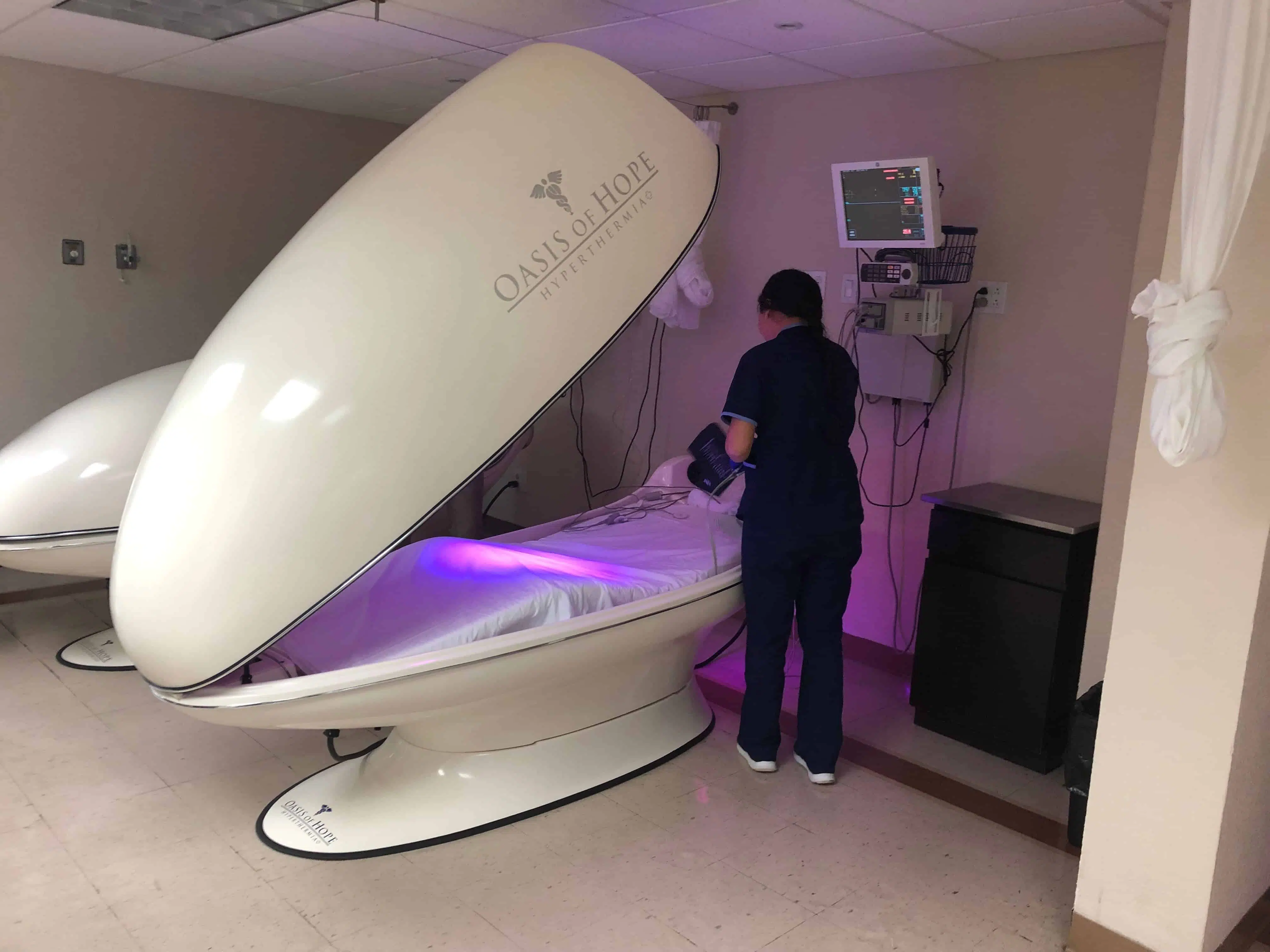
Hyperthermia
Hyperthermia is an innovative treatment offered by alternative clinics that raises tumor temperature to 40-45°C using techniques like microwave, radiofrequency, or ultrasound.
It’s used alone or with low-dose chemotherapy to enhance effectiveness against pancreatic tumors.
A systematic review of 14 clinical studies with 395 pancreatic cancer patients showed promising results:
- Longer median overall survival: 11.7 months with hyperthermia vs. 5.6 months without hyperthermia.
- Improved overall response rates: 43.9% with hyperthermia vs. 35.3% without hyperthermia.
These findings suggest that hyperthermia may help improve treatment outcomes and survival rates, but more studies are needed to confirm these results.
Hyperthermia is typically only available at specialized alternative or integrative oncology clinics. Patients should consult their healthcare team before pursuing this treatment.
Regional Chemotherapy (RCT)
Regional chemotherapy is a targeted approach that delivers chemotherapy drugs directly to the pancreatic tumor site. This method uses a catheter in an artery supplying blood to the pancreas, allowing for higher drug concentrations at the tumor while minimizing exposure to the rest of the body.
Key benefits of RCT Include:
Enhanced treatment effectiveness
Reduced systemic side effects compared to traditional chemotherapy
Applicability to various stages of pancreatic cancer, including locally advanced and metastatic cases
Some studies have shown improved tumor response rates and survival outcomes with RCT, particularly as a second-line treatment for advanced pancreatic cancer.
By focusing chemotherapy directly on the tumor, RCT offers a promising approach to managing this challenging disease.
Dendritic Cell Therapy
Dendritic cell (DC) therapy is a cutting-edge treatment that harnesses the body’s immune system to target and destroy cancer cells. Dendritic cells play a crucial role in the immune system’s ability to recognize and respond to pathogens. By activating T-cells, this therapy helps the body fight pancreatic cancer more effectively.
A clinical trial is currently exploring the effectiveness of Double Loaded DC therapy in human pancreatic cancer patients, offering new hope for those battling this disease
Key Points about Dendritic Cell Therapy:
Recent animal studies show promising results, especially with “Double Loaded” DCs secreting AIMp1 and IL-12
Combining DC therapy with conventional treatments like chemotherapy has shown enhanced outcomes
In studies with gemcitabine, a common chemotherapy for pancreatic cancer, adding DC therapy prevented tumor recurrence
Repurposed Medications as Alternative Treatment for Pancreatic Cancer
Mebendazole
Mebendazole, from the same class of medications as Fenbendazole, has shown promise in pancreatic cancer treatment:
In early pancreatic cancer models, it reduced inflammation and dysplasia For advanced stages, it decreased tumor size and metastasis
A 2021 Johns Hopkins University study found it could slow or stop growth and spread of both early and late-stage pancreatic cancer in mouse models
Ivermectin
Ivermectin, an antiparasitic drug, has demonstrated potential in pancreatic cancer treatment- It inhibits cancer cell growth and spread, Promotes natural death of cancer cells, Blocks tumor stem cell development and Can reverse multi-drug resistance.
A study at Yonsei University College of Medicine in South Korea found that combining Ivermectin with Gemcitabine was more effective in slowing pancreatic cancer progression than Gemcitabine alone.
The combination treatment showed significant tumor growth reduction in living organism tests.
These repurposed medications offer new possibilities for pancreatic cancer treatment, though more research is needed to fully understand their efficacy, safety, and optimal dosing in humans.
Supplements as Alternative Pancreatic Cancer Treatments
Clinical trials have explored the potential of natural products in combination with conventional therapies for pancreatic cancer.
Here are some key findings:
Ginkgo Biloba Extract
Showed favorable results when combined with 5-FU in a phase II trial
GBS-01 (Arctium Lappa / Burdock Root)
Demonstrated promise in a phase 1 trial. Potential as a co-treatment with gemcitabine (2016 study)
Curcumin
Two phase 2 trials showed mixed results. Some patients responded well, while others experienced severe side effects
Kanglaite (Coicis Semen Extract)
Improved progression-free survival in a phase 2 trial
Iscador Qu (Mistletoe Extract)
Improved quality of life in patients with advanced pancreatic cancer in a phase 3 trial
These supplements show potential in supporting pancreatic cancer treatment, but it’s crucial to consult with healthcare professionals before incorporating them into any treatment regimen, as they may interact with other medications or treatments including chemotherapy.
Wrapping Up
While These alternative treatments for pancreatic cancer offer hope, they should be integrated into a comprehensive treatment plan under professional guidance.
Navigating alternative cancer treatments can be complex.
Let the Heal Navigator team guide you through your options.
Our experts can provide personalized advice and connect you with specialized clinics. Contact us today to explore a holistic approach to your pancreatic cancer treatment journey.

